Oct 5, 20245 min read
Agents as Colleagues, Not Features
The mental model shift that changes how you build AI systems.
The mental model shift that changes how you build AI systems.
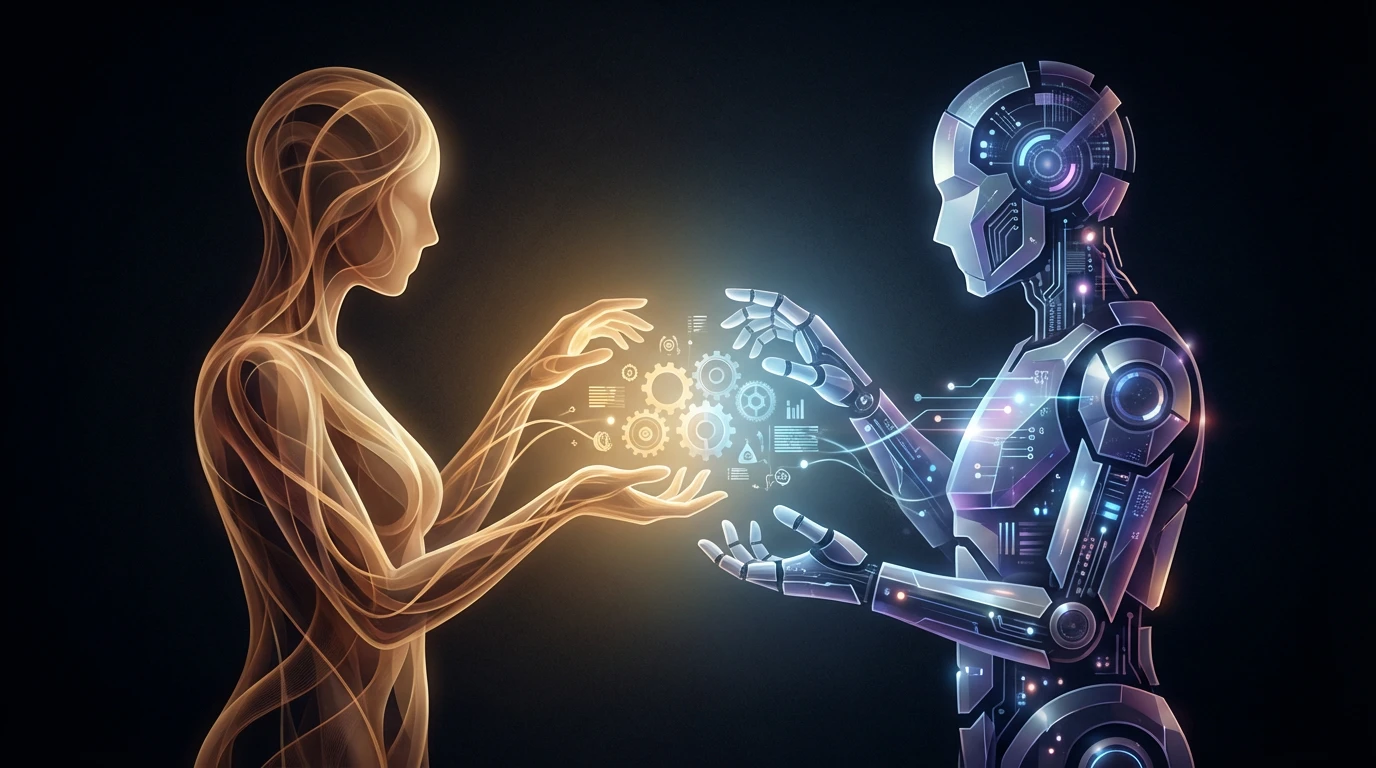
Most companies think about AI wrong.
"Let's add an AI feature to our product."
This is the chatbot mindset. Bolt on some natural language interface. Let users "talk to the AI." Ship it.
The result: a parlor trick. Impressive in demos, annoying in practice, abandoned after the novelty wears off.
What if we thought about it differently?
What if AI agents had the same standing as human team members?
A colleague has:
A feature has none of these. A feature is stateless, contextless, a tool you pick up and put down.
The question isn't "how do I add AI to my product?" It's "what would it mean for an AI agent to be a member of my team?"
When you treat agents as colleagues, decisions look different:
Permissions become real. A human colleague in accounting has access to financial data. A colleague in marketing doesn't. Why would AI be different? Agents need scoped permissions, not blanket access.
Memory becomes essential. You don't re-explain your business context to a colleague every morning. They remember (see Building AI That Actually Remembers). Agents that forget everything between sessions aren't colleagues, they're temps.
Oversight becomes natural. Even trusted colleagues have their work reviewed. Senior decisions get approval. New hires get more supervision. Agents should have the same graduated autonomy.
Failure becomes manageable. When a colleague makes a mistake, you debug it. What went wrong? How do we prevent it? An agent's decisions should be traceable, auditable, correctable.
This mental model has architectural consequences.
Not just "the AI" — specific agents with specific purposes.
Each has its own:
A colleague's effectiveness comes from their process, not just their knowledge.
An agent's behavior should be defined by a workflow:
The LLM provides reasoning. The workflow provides structure. Together: reliable agent behavior.
When a colleague learns something, that knowledge can persist beyond them. Documented in wikis, passed to successors.
Agent memory should work the same way:
When you "train" an agent, you're building organizational knowledge, not just configuring a feature.
Human employees have:
Agents need:
You can't just "deploy an agent" any more than you can just "deploy an employee."
If agents are colleagues, the product changes too.
Agent profiles, not settings. Users should understand who each agent is. Its role, capabilities, limitations. Not buried in a settings page.
Conversation history, not chat logs. The relationship has continuity. Past interactions matter.
Feedback loops, not bug reports. When an agent does something wrong, users should be able to correct it. "Actually, I prefer X." That correction should stick.
Autonomy controls. Some users want agents to act independently. Others want approval before every action. Both should be supported.
The colleague model enables things the feature model can't:
Multi-agent systems. Multiple specialists collaborating (see Multi-Agent Patterns That Actually Work). Router agent assigns work. Supervisor agent reviews output. Specialist agents execute. Just like a team.
Progressive autonomy. New agents start supervised. As they prove reliable, they get more freedom. Just like new hires.
Institutional memory. Knowledge accumulates over time. The AI doesn't just answer questions — it remembers the answers for next time.
Accountability. When something goes wrong, you can trace it. Which agent made which decision, based on what information, following what logic.
This model is harder than the feature model. It requires:
It's tempting to skip this and ship a chatbot.
But chatbots plateau. They're novelties that become annoyances. Colleague-agents compound. They get better over time. They take on more work. They become genuinely valuable.
The question isn't whether to use AI. It's whether you're building a feature or a teammate.
Features are easy to build and easy to ignore. Teammates are hard to build and impossible to replace.